
Case studies
Making the case for connected defence data through the Defence Testbed Accelerator programme
The UK Defence supply chain faces significant economic and operational impacts. Parts shortages and long lead times that cause maintenance delays often mean that critical assets sit idle. The manufacturing design data needed to produce or replicate those parts sits across a network of original equipment manufacturers (OEMs), locked inside fragmented, incompatible systems with no common way to access or share it. Any delays in accessing parts or design data drive significant cost, downtime, and reduced readiness.
Additive manufacturing (AM), a common type of which is 3D printing, offers a practical and agile route through this problem. If the right design data can be accessed quickly and securely, parts can be produced on demand, closer to where they are needed, by a distributed network of authorised manufacturers. For the Ministry of Defence (MOD), a resilient supply chain capable of rapid response and flexibility is essential, and achieving this requires both strong collaboration across the Defence supply chain and the digital infrastructure for secure, interoperable technical data sharing.
The Defence Testbed Accelerator was designed to meet these challenges, accelerating the practical application of deep tech innovation in the defence industry to equip the UK to be future ready.
About the programme
The Defence Testbed Accelerator is delivered by Digital Catapult as part of the Made Smarter | Digital Supply Chain Hub, alongside the MOD and in Collaboration with the Catapult Network including the High Value Manufacturing Catapult (HVMC), the NCC and the Manufacturing Technology Centre (MTC). The programme was established to drive UK defence supply chain resilience by convening capabilities that bring together the technologies needed to securely access, store and share engineering data across the defence supply chain, with an initial focus on additive manufacturing.
The programme was structured around two connected challenges. Challenge A asked participating companies to build connector-layer software capable of linking to different OEM product lifecycle management (PLM) systems within a testbed environment, extracting and standardising technical data pack (TDP) metadata. Challenge B asked a separate set of companies to develop a federated digital inventory: a single, permissioned platform that could aggregate that standardised data and make it accessible to authorised users across the supply chain.
Five UK technology companies were selected to address these challenges, each receiving up to £100,000 in funding to develop proof-of-concept solutions.
How the programme supported businesses
Each of the five companies entered the programme with existing technology and deep domain expertise. For most of the participating companies, what the programme offered was simply not available through a normal commercial route. This included direct access to MOD-aligned requirements and working inside a testbed built on representative OEM systems.
TECHNIA, a leader in PLM and systems integration, took on Challenge A. The company deployed its TECHNIA Integration Framework (TIF) to build a connector capable of extracting and standardising TDP metadata from multiple OEM PLM systems. Dataline Labs and CamyPro also worked on Challenge A. Dataline Labs brought its DataConnect Pro platform and MIRA artificial intelligence (AI) search layer to the challenge; CamyPro developed a secure, event-driven pipeline using locally deployed large language models (LLMs) to extract intelligence from unstructured engineering documents.
On Challenge B, Quaisr and Vistory Group developed the federated inventory infrastructure. Quaisr deployed its digital connectivity platform to build a permission-controlled inventory with role-based access for MOD users and additive manufacturers, including a natural language query interface, whilst Vistory Group brought its patented private blockchain platform, MainChain, to demonstrate secure, verifiable data sharing between organisations without existing trust relationships.
The two-challenge structure was a deliberate design. By dividing the work across connector and inventory layers, the programme created a natural dependency between Challenge A and Challenge B teams, requiring them to collaborate on interfaces, data formats and integration points. To equip the UK’s defence supply chain to be future-ready and drive resilience, Digital Catapult's convening capabilities were central to making that integration work in practice, managing stakeholder relationships, resolving technical blockers and keeping deliverables aligned with MOD requirements, through challenge scoping and considering possible solution architectures.
Input from the NCC and MTC provided additional rigour, particularly around standards for TDP data, REpresentational State Transfer (REST) integration constraints and the realities of additive manufacturing workflows, and beyond this also looked at a Built-to-print scenario where necessary files are securely transferred from the federated source repositories to manufacturing houses of choice on request.
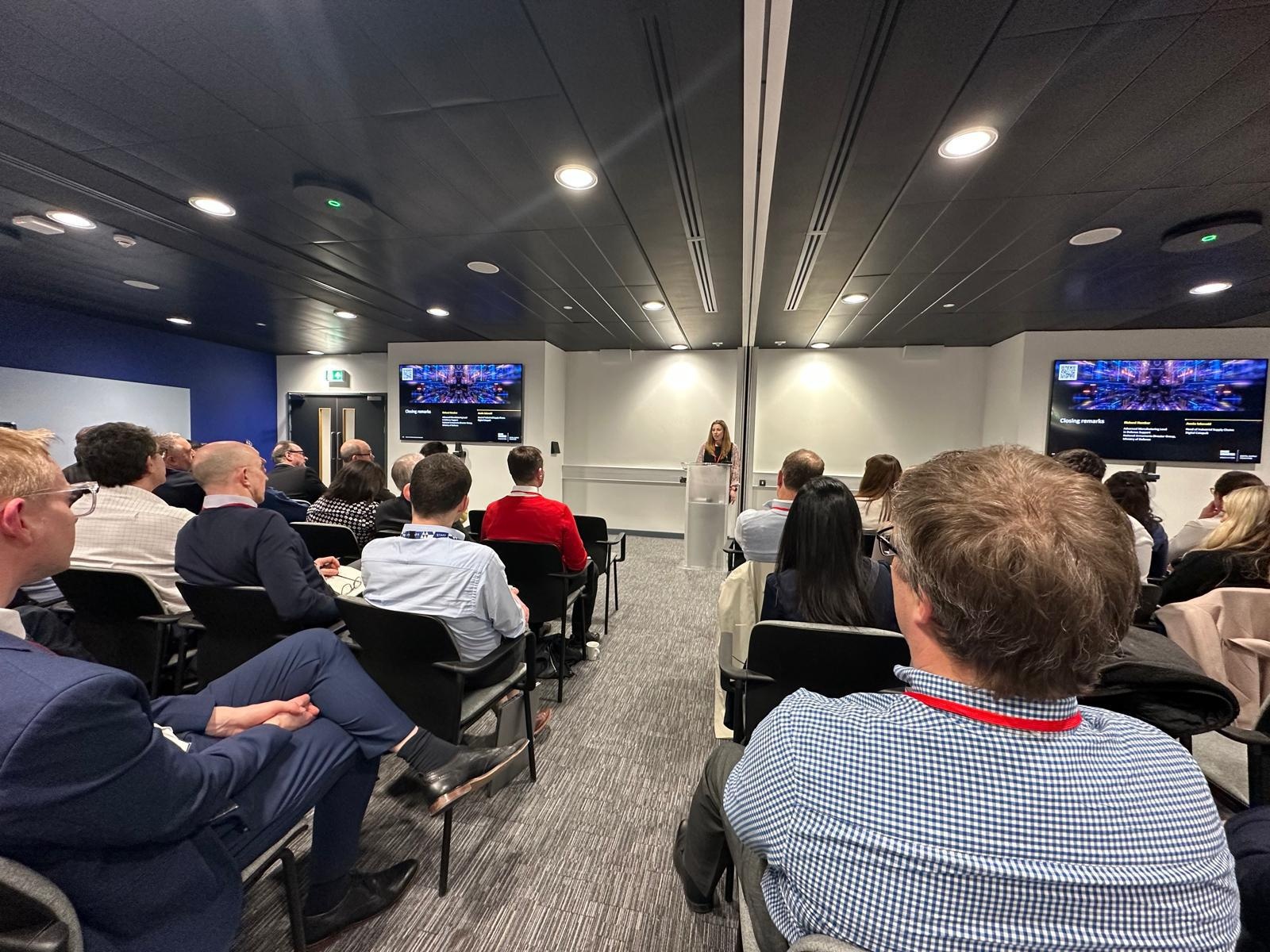
Impact and results
The programme produced a set of working, validated solutions across both challenge areas. Connector frameworks were deployed and tested against multiple OEM PLM systems and metadata was successfully extracted, standardised and passed to federated inventory platforms. Secure, permissioned access was demonstrated in a controlled defence-aligned environment, which for the MOD demonstrated the functions and features required for the improved management of their supply chain for AM.
"This is an exciting moment in the evolution of the ideas stated in the MOD’s recently issued Advanced Manufacturing Strategy. The testbed provides the basis to bring to life some of those ideas so we can see the art of the possible and understand the next steps to make them a reality. The Catapults have provided energy, pace and buckets of expertise to get us this far very quickly whilst adding another five Small and Medium-sized Enterprises (SME) into the Defence sphere, consistent with wider Governmental objectives, and the Defence Industrial Strategy.”
Richard Hamber, Advanced Manufacturing Lead in Defence Support, National Armaments Director Group
At the company level, the outcomes were tangible. TECHNIA's connector framework is projected to reduce onboarding effort by 50-70% per new OEM or PLM system. In a defence supply chain where each new integration would otherwise require months of bilateral engagement, that is a substantial reduction. Meanwhile, CamyPro's AI extraction pipeline achieved a 98% consistency rate for categorical outputs using a locally deployed model operating in an air-gapped configuration, confirming that high-accuracy AI processing is viable within MOD security constraints. Dataline Labs, drawing on its deployments in other sectors, has previously demonstrated cost savings exceeding £210,000 in data handling and a 70% reduction in manual data delivery tasks, the same underlying approach now validated in the defence testbed.
Beyond the technical outputs, the programme opened new market pathways for all five companies, with a view to enabling the deep tech startups to scale. Working directly with MOD stakeholders across technical, commercial and strategic teams gave participants a clearer understanding of defence procurement dynamics and what would be required to scale their solutions into live operational environments. The relationships built across the cohort are expected to carry into future collaboration, with companies identifying complementary skill sets that may lead to joint work on other projects.
The Defence Testbed Accelerator demonstrates what becomes possible when deep tech innovation is tested in a structured, mission-aligned environment. Defence supply chains are among the most demanding contexts there are – they are complex, sensitive and consequential. Proving that new data infrastructure can work here makes a compelling case for what it can do elsewhere.
What the cohort said
“This programme showed how much value can be unlocked when the right problem, partners, and environment come together. It gave us a real-world setting to prove that critical engineering data can be securely extracted from unstructured TDPs and turned into actionable insight using locally deployed AI. We’re excited to build on this work, unlocking engineering data for future customers and enabling faster, more informed manufacturing decisions.”
Adam Lofts, CEO, CamyPro
“Every large organisation has critical data trapped in systems that don't talk to each other. We proved in this programme that you can connect those systems and, more importantly, put intelligence on top that makes the data genuinely useful.”
Evan Shapiro, CEO and Co-Founder, Dataline Labs
“This project gave us a great opportunity to learn more about how the MOD operates and the intricacy of Defence supply chain logistics. It is clear that there is real scope for Quaisr and the rest of the cohort to make a big impact in this space.”
Assen Batchvarov, Head of Product and Growth, Quaisr
“We delivered a scalable, vendor-neutral PLM connector while navigating access limitations, gaps in available metadata and evolving programme requirements. Through coordinated development, a well-structured common data model and close collaboration with Challenge B teams, we kept the project on track and ensured steady technical progress."
Rajbinder Sujan, Project Manager, TECHNIA
Read the case studies for each of the participating companies to find out more about how they contributed to the accelerator challenges
Challenge A: CamyPro, Dataline Labs and TECHNIA
Challenge B: Quaisr and Vistory Group